

Bulldozer prices are one of the key factors researched by construction companies, earthmoving contractors, mining operations, infrastructure companies and industrial businesses planning to invest in new heavy equipment in 2026. However, comparing bulldozers based only on their purchase price is not enough to make the right long-term investment decision. Operating weight, engine power, blade configuration, undercarriage design, ground conditions, attachments, service availability and spare parts support should all be considered before selecting a machine.
For this reason, there is no single answer to the question, “How much does a bulldozer cost?” Even within the same brand, bulldozer prices can vary significantly because machines are designed for different operating classes and applications. A compact or medium-size bulldozer and a heavy-duty machine designed for demanding earthmoving operations cannot be evaluated within the same price category. Configuration, optional equipment and current commercial conditions can also influence the final quotation.
At Shantui Turkey, we recommend starting the purchasing process by identifying the actual operating requirements of the project. Buying a bulldozer with significantly more capacity than required may increase the initial investment as well as transportation and operating costs. On the other hand, selecting a machine that does not provide sufficient capacity for the application can reduce productivity and increase the time required to complete the work.
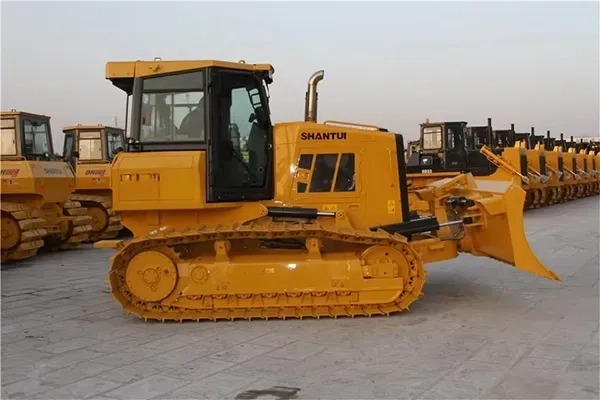
The current Shantui Turkey bulldozer range includes the DH10-C2 LGP, DH13-K2 LGP, DH16-K2 LGP, DH16-M XL, DH16-M LGP, DH20-M XL, DH24-M XL, DH24-M LGP and DH36-M. These models provide different operating weights, power levels and configurations for different jobsite conditions.
In this guide, we explain the factors that influence bulldozer prices in 2026, what to consider when looking for a bulldozer for sale, the differences between XL and LGP configurations, why operating weight and engine power matter, how blade and attachment choices affect the machine, and why service and spare parts support should be considered before making a purchase.
How Much Does a Bulldozer Cost in 2026?
New bulldozer prices vary according to model, operating class, technical specifications and configuration. Therefore, it is not practical to provide one fixed price that applies to every bulldozer. To obtain a meaningful quotation, the required machine class and working conditions first need to be identified.
One of the main factors affecting bulldozer price is machine capacity. A machine with an operating weight of approximately 9.5 tonnes and a bulldozer weighing more than 20 or 40 tonnes belong to completely different operating categories. Engine power, blade capacity, undercarriage design and the intended application can also influence the specification and therefore the final price.
For example, within the current Shantui Turkey range, the DH10-C2 LGP has an operating weight of 9,500 kg and rated power of 86 kW, while the DH20-M XL has an operating weight of 22,200 kg and rated power of 186 kW. The DH24-M family moves into a 213 kW power class, while the DH36-M reaches an operating weight of 42,000 kg.
This is why online bulldozer price comparisons should always begin by checking whether the machines actually belong to comparable classes. Two machines may both be described as bulldozers, but that does not necessarily mean they are designed for the same workload or operating environment.
For current 2026 Shantui bulldozer prices, customers can contact the Shantui Turkey sales team with their project requirements or the specific model they are interested in.
What Factors Affect Bulldozer Prices?
The operating class of the machine is one of the primary factors affecting bulldozer prices. Engine power, operating weight, blade type, track and undercarriage configuration, XL or LGP design, optional attachments and intended application can also affect the final machine specification.
A bulldozer is not simply an engine connected to a blade. It is an integrated heavy equipment platform consisting of the powertrain, hydraulic system, undercarriage, chassis, tracks, operator environment and control systems. Different applications may require different configurations of these systems.
For example, an XL configuration may be suitable for certain working conditions, while an LGP machine can be considered where lower ground pressure is important. Depending on the application, different blades, rippers or machine control systems may also be required.
For this reason, the first question when researching bulldozer prices should not be “What is the cheapest bulldozer?” A more useful question is “Which bulldozer class and configuration does my project actually require?”
Once this has been established, price comparisons become considerably more meaningful.
What Should You Determine Before Looking for a Bulldozer for Sale?
Before searching for a bulldozer for sale, the first step is to identify exactly what the machine will be expected to do. Grading, earthmoving, filling, road construction, mining, quarrying and other heavy-duty operations can create very different technical requirements.
Ground conditions are particularly important. A bulldozer working on firm and stable ground may require a different configuration from a machine operating on softer terrain where ground pressure becomes a significant consideration.
Daily operating hours and expected productivity should also be evaluated. If the bulldozer will be one of the primary production machines within the operation, service availability, maintenance planning and spare parts support become increasingly important.
The more accurately the project requirements are defined before purchase, the easier it becomes to identify an appropriate model and compare bulldozer prices on a like-for-like basis.
Why Is Bulldozer Operating Weight Important?
Operating weight is one of the fundamental technical specifications used when comparing bulldozer models. However, a heavier machine should not automatically be considered the better option.
Operating weight should be evaluated together with the intended application, jobsite conditions, transportation requirements and required productivity. Purchasing a bulldozer that is significantly larger than necessary can affect not only the initial investment but also transportation and operating costs.
The current Shantui Turkey range provides several operating-weight classes. The DH10-C2 LGP has an operating weight of 9,500 kg, while the DH13-K2 LGP weighs 14,800 kg. The DH16-M XL is 17,665 kg, the DH16-K2 LGP is 18,800 kg, and the DH16-M LGP has an operating weight of 18,830 kg.
Moving further up the range, the DH20-M XL has an operating weight of 22,200 kg. Depending on configuration, the DH24-M models extend into approximately the 23.5 to 27.5-tonne range. The DH36-M is listed at 42,000 kg in the current Shantui Turkey bulldozer range.
These differences demonstrate why bulldozer selection should not simply be divided into “small” and “large” machines. The actual operating requirements should determine the appropriate machine class.
How Does Engine Power Affect Bulldozer Selection and Price?
Engine power is another specification commonly compared by buyers looking for bulldozers for sale. Different operating classes naturally require different levels of power, but selecting the machine with the highest kW rating does not automatically result in the best investment.
Within the current Shantui Turkey range, the DH10-C2 LGP provides 86 kW, the DH13-K2 LGP 118 kW, and the DH16-K2 LGP 142 kW. The DH16-M XL and DH16-M LGP provide 151 kW, while the DH20-M XL provides 186 kW. Both the DH24-M XL and DH24-M LGP are rated at 213 kW.
Engine power should always be considered together with operating weight, powertrain configuration, blade design and intended application. Technical specifications should not be treated as isolated numbers. They form part of a complete machine designed for a particular range of operating conditions.
This also explains why two bulldozers with relatively similar engine power may still have different prices or be suited to different jobs.
What Is the Difference Between XL and LGP Bulldozers?
When comparing bulldozer models, buyers may encounter designations such as XL and LGP. These configurations are particularly important when considering the relationship between the undercarriage and the ground conditions in which the machine will operate.
LGP stands for Low Ground Pressure. This type of configuration is designed for applications where reducing the pressure applied to the ground is important, particularly on softer surfaces or working environments where machine flotation needs to be considered.
The current Shantui Turkey range includes several LGP models, including the DH10-C2 LGP, DH13-K2 LGP, DH16-K2 LGP, DH16-M LGP and DH24-M LGP. The DH24-M LGP, for example, is specified with a 910 mm track shoe width and is configured for applications where low ground pressure is an important requirement.
The current range also includes XL models such as the DH16-M XL, DH20-M XL and DH24-M XL, providing alternatives for different working environments.
The important question is not whether XL or LGP is universally “better.” The correct configuration depends on the ground conditions, application and operating requirements of the project.
Does Blade Configuration Affect Bulldozer Price and Performance?
The blade is one of the most important working components of a bulldozer. Blade type and capacity can influence how the machine is used and the type of work it is capable of performing efficiently.
For example, the Shantui DH16-M XL is listed with a PAT blade and a blade capacity of 3.5 m³, while the DH20-M XL is listed with a PAT blade and a 5.0 m³ capacity. The DH24-M family provides different configurations according to the specific model and intended application.
These differences demonstrate why buyers should not compare bulldozers using only engine power and operating weight. Blade configuration is part of the complete machine specification and should be selected according to the actual work being performed.
Different blade or attachment configurations may also affect the commercial quotation. When requesting a bulldozer price, providing details about the intended application can therefore help the sales team identify a more appropriate machine configuration.
Why Are Rippers and Optional Attachments Important?
Rippers can expand the range of applications in which a bulldozer can operate. Depending on the machine and working conditions, different ripper configurations may be considered.
Within the Shantui range, certain models can be configured with options such as single-shank or multi-shank rippers. Some machines may also support additional equipment or machine-control solutions depending on their configuration.
For example, the DH24-M XL can be evaluated with different ripper options, while the DH20-M XL can support configurations including a three-shank ripper and automatic grading-related equipment. The DH16-M XL also offers optional equipment for different operating requirements.
Optional equipment can change the machine’s configuration and intended use, which means it may also influence the final bulldozer price.
When requesting a quotation, it is therefore more useful to explain what the bulldozer will be used for rather than providing only a model name.

Which Shantui Bulldozer Models Are Available in Turkey?
The current Shantui Turkey bulldozer range includes nine models covering different operating weights, power classes and jobsite requirements. Understanding the position of each machine within the range can help buyers narrow down the options before requesting a quotation.
Shantui DH10-C2 LGP
The DH10-C2 LGP has an operating weight of 9,500 kg and rated power of 86 kW at 2,200 rpm, making it one of the more compact bulldozer options in the current Shantui Turkey range. The machine uses a Cummins engine and its LGP configuration can be considered for applications where low ground pressure is relevant.
For projects that do not require the capacity of a much larger bulldozer, the DH10-C2 LGP may be evaluated according to the required productivity and jobsite conditions.
Shantui DH13-K2 LGP
The DH13-K2 LGP has an operating weight of 14,800 kg and rated power of 118 kW at 2,200 rpm. It is another LGP-configured machine in the current Shantui Turkey product range.
The DH13-K2 LGP occupies a different operating class from the DH10-C2 LGP and the larger DH16 and DH20 series machines. As with every model, ground conditions, required production and application should determine whether this class is suitable.
Shantui DH16-K2 LGP
The DH16-K2 LGP has an operating weight of 18,800 kg and rated power of 142 kW at 2,100 rpm. The model uses an FPT engine and is offered in an LGP configuration.
When evaluating the DH16-K2 LGP, buyers should determine whether an approximately 19-tonne operating class and LGP undercarriage configuration are appropriate for the intended work.
Shantui DH16-M XL
The DH16-M XL has an operating weight of 17,665 kg and rated power of 151 kW at 2,100 rpm. The model is listed with a PAT blade and a blade capacity of 3.5 m³.
Its configuration includes features designed around machine operation, control and maintenance accessibility. Depending on project requirements, optional equipment can also be evaluated.
The DH16-M XL provides an alternative for customers looking at the DH16 operating class but requiring an XL rather than an LGP configuration.
Shantui DH16-M LGP
The DH16-M LGP has an operating weight of 18,830 kg and rated power of 151 kW at 2,100 rpm. It provides an LGP alternative within the DH16-M family.
When comparing the DH16-M XL and DH16-M LGP, buyers should not focus only on the difference in operating weight. Ground conditions and undercarriage requirements are fundamental to deciding which configuration is more appropriate.
Shantui DH20-M XL
The DH20-M XL has an operating weight of 22,200 kg and uses a Cummins engine with rated power of 186 kW at 2,050 rpm. The machine is listed with a PAT blade offering a 5.0 m³ blade capacity.
Depending on operating requirements, additional equipment such as a three-shank ripper and grading-related systems can also be considered.
The DH20-M XL can be evaluated for projects requiring a higher operating class than the DH16 range.
Shantui DH24-M XL
The DH24-M XL has an operating weight of approximately 23,562 to 26,209 kg depending on configuration. It uses a Cummins engine and provides rated power of 213 kW at 2,000 rpm.
The model is available with different working equipment according to application, including ripper options. At this machine class, buyers should carefully evaluate whether the available capacity matches actual project requirements.
Transportation, operating hours, ground conditions, productivity requirements and total cost of ownership become particularly important when moving into higher-capacity bulldozer classes.
Shantui DH24-M LGP
The DH24-M LGP has an operating weight of approximately 24,823 to 27,470 kg depending on configuration and rated power of 213 kW at 2,000 rpm from its Cummins engine.
Its LGP configuration provides a different option within the DH24-M family. The machine is specified with 910 mm track shoes, reflecting its low-ground-pressure-oriented design.
For buyers comparing the DH24-M XL and DH24-M LGP, the decision should be based on jobsite and ground conditions rather than price alone.
Shantui DH36-M
The DH36-M is listed in the current Shantui Turkey bulldozer range with an operating weight of 42,000 kg. It represents one of the higher operating-weight machines within the current product portfolio.
A bulldozer in this class should be evaluated as a major production asset. Project scale, required productivity, daily operating hours, transportation, maintenance planning, service support and total cost of ownership should all be considered alongside the initial purchase price.
Which Shantui Bulldozer Should You Choose?
The right model depends on the actual working environment rather than simply the available budget. Different parts of the Shantui bulldozer range can be evaluated according to operating weight, ground conditions and required capacity.
For applications requiring a lower operating weight, models such as the DH10-C2 LGP and DH13-K2 LGP can be considered. Around the 18-tonne class, the DH16-K2 LGP, DH16-M XL and DH16-M LGP provide different configurations.
Where greater capacity is required, the DH20-M XL and DH24-M family provide additional alternatives. For operations requiring a significantly higher machine class, the DH36-M is available within the current Shantui Turkey range.
However, this classification should be treated as an initial guide rather than a final purchasing recommendation. Two bulldozers within a similar weight range can have different undercarriage, blade and application characteristics.
Sharing jobsite conditions and operating requirements with the Shantui Turkey sales team allows the available models to be evaluated according to the actual project.
New or Used Bulldozer?
Buyers looking for a bulldozer for sale will often encounter both new and used equipment. A used bulldozer may offer a lower initial purchase price, but its technical condition must be evaluated alongside the asking price.
Important considerations include operating hours, maintenance history, engine condition, hydraulic system, undercarriage, tracks, blade, chassis, ripper if fitted, and the type of work the machine performed previously.
The undercarriage deserves particular attention on a used bulldozer because these machines frequently operate in demanding ground conditions. Wear on undercarriage components can have a significant impact on future maintenance requirements.
A used bulldozer that appears inexpensive at the point of purchase may therefore create additional maintenance and spare parts costs later.
With a new bulldozer, buyers can evaluate a machine without uncertainty about previous operation while also considering the applicable current sales, warranty and after-sales support conditions.
The correct decision depends on budget, utilisation plans and the level of operating risk the business is prepared to accept.
Why Are New Bulldozer Prices Not Always Published Online?
Heavy construction equipment is different from standard consumer products. Machine configuration, optional equipment, delivery requirements and current commercial conditions can all affect the final quotation.
For this reason, professional construction machinery is often sold through project-specific or machine-specific quotations rather than through one permanently published online price.
The same principle applies when requesting current Shantui bulldozer prices in Turkey. Customers can contact the Shantui Turkey sales team with the model they are interested in or explain the intended application and working conditions.
If you are not sure which bulldozer model you need, you can begin by sharing basic information about the project, required capacity and ground conditions. This allows the appropriate machines within the current product range to be evaluated before a quotation is prepared.
Why Is Service Support Important When Buying a Bulldozer?
Purchasing a bulldozer is only the beginning of the machine’s operating life. Throughout its service life, the equipment will require scheduled maintenance, inspections and potentially technical repairs.
When a bulldozer is a key production machine, unplanned downtime can affect much more than the maintenance budget. It can influence production schedules, labour utilisation and the wider project.
This is why after-sales service should be evaluated before purchasing a machine. Buyers should understand how technical service requests are created, what service organisation is available in the area where the machine will operate and how support is managed after delivery.
At Shantui Turkey, we support our customers’ after-sales requirements through our service and spare parts organisation in Turkey.
A competitive bulldozer price is important, but the ability to support the machine throughout its working life should also form part of the purchasing decision.
Why Is Bulldozer Spare Parts Support Important?
Bulldozers are designed for demanding operating environments and contain numerous mechanical, hydraulic and undercarriage components. Over the working life of the machine, requirements can range from routine maintenance parts to components needed for repair.
Spare parts support should therefore be investigated before selecting a bulldozer brand.
Correct identification of parts according to the machine model and serial number is an important part of the process. Stock or supply status can vary according to the requested component, so current availability should be confirmed for each specific requirement rather than assumed.
A machine with an attractive initial purchase price but an unclear after-sales parts process can create additional operational costs later in its life.
For businesses that depend on their bulldozers for continuous production, the spare parts and service structure should be considered part of the overall machine investment.
Should You Calculate Total Cost of Ownership Before Buying a Bulldozer?
Yes. The initial purchase price is only one component of the real cost of owning a bulldozer.
Total cost of ownership can include the purchase price, fuel consumption, scheduled maintenance, spare parts, service, transportation and the financial effect of machine downtime. Depending on annual utilisation, these costs can become highly significant over the working life of the machine.
For example, a bulldozer purchased at a lower initial price may not necessarily be the lower-cost option if it creates higher operating expenses or extended downtime. Similarly, buying significantly more machine capacity than the project requires can mean paying for capability that the business does not actually use.
The right bulldozer is therefore not simply the machine with the lowest purchase price. It is the machine that matches the application and provides an appropriate balance between capacity, operating requirements and long-term ownership costs.
Common Mistakes When Buying a Bulldozer
One of the most common mistakes is comparing bulldozers only by price. Machines with different operating weights, engine power levels, undercarriage configurations and blade systems should not be treated as direct alternatives simply because they belong to the same equipment category.
Another mistake is assuming that a larger bulldozer is automatically a better investment. If the additional capacity is not required by the project, the business may incur unnecessary purchase, transportation and operating costs.
Ground conditions are also sometimes overlooked. The existence of different configurations such as XL and LGP reflects the fact that bulldozers operate in very different environments. Selecting the wrong configuration can reduce the suitability of the machine for the intended site.
Service and spare parts support should not be investigated only after a problem occurs. These factors should be part of the original purchasing assessment.
Finally, avoid choosing a bulldozer based on a single specification such as engine power. The engine, powertrain, undercarriage, blade, hydraulic system and other components work together as one machine. The complete configuration should be evaluated according to the intended application.
What Questions Should You Ask Before Buying a Bulldozer?
Before purchasing a bulldozer, determine what the machine will be used for, the type of ground it will operate on, expected daily operating hours, required production capacity and whether it will need to be transported regularly between jobsites.
Next, identify the appropriate operating-weight and power class. Consider whether an XL or LGP configuration is more suitable for the site and determine what blade configuration and optional equipment may be required. If a ripper or machine-control system is important to the application, this should be discussed during the configuration process rather than after purchase.
After evaluating the technical requirements, examine the after-sales structure. Ask about current warranty conditions, service organisation and spare parts support for the machine being considered.
Finally, compare the complete investment rather than only the purchase price. Fuel, maintenance, transportation, service, spare parts and potential downtime should all form part of the financial assessment.
Frequently Asked Questions About Bulldozer Prices
Bulldozer prices vary according to brand, model, operating weight, engine power, undercarriage configuration, blade and optional equipment. For current 2026 Shantui bulldozer prices, customers can request a model-specific quotation from the Shantui Turkey sales team.
Consider the intended application, ground conditions, operating weight, engine power, blade configuration, undercarriage, daily operating hours, service availability, spare parts support and total cost of ownership.
Bulldozers are designed for different operating classes and applications. Power, weight, undercarriage design, XL or LGP configuration, blade type and optional equipment can all influence machine specification and price.
In common industry usage, “dozer” is frequently used as a shorter term for bulldozer. “Bulldozer” provides the more complete equipment description, while both terms may be used when buyers search for machines online.
LGP stands for Low Ground Pressure. LGP machines are configured for applications where reducing the pressure applied to the ground is important, particularly on softer surfaces or where flotation is a significant operating consideration.
XL identifies a different machine and undercarriage configuration intended for particular operating conditions. The choice between an XL and LGP bulldozer should be made according to ground conditions and the intended application rather than the designation alone.
The current Shantui Turkey bulldozer range includes the DH10-C2 LGP, DH13-K2 LGP, DH16-K2 LGP, DH16-M XL, DH16-M LGP, DH20-M XL, DH24-M XL, DH24-M LGP and DH36-M.
You can contact the Shantui Turkey sales team with the model you are interested in or provide information about your project and working conditions. The appropriate model and configuration can then be evaluated before a current quotation is prepared.
Yes, but engine power should not be evaluated independently. Operating weight, blade capacity, powertrain, ground conditions and intended application should all be considered together.
The correct choice depends on budget, expected utilisation and risk tolerance. When considering a used machine, operating hours, maintenance history, undercarriage condition, hydraulic system and overall mechanical condition should be examined carefully. With a new bulldozer, current warranty and after-sales conditions can be evaluated as part of the purchase.
Yes. Bulldozers require scheduled maintenance and may require technical service throughout their working life. Buyers should understand the service organisation and support process before completing a purchase.
Yes. Different maintenance and repair components may be required throughout the life of the machine. Spare parts support should therefore be considered as part of the purchasing decision rather than only when a part is eventually needed.
Request a Quote for Shantui Bulldozer Prices in 2026
Buying a bulldozer is a long-term investment decision. The right machine should not be selected solely according to today’s purchase price, but according to the productivity, operating conditions and long-term costs it will create throughout its working life.
The current Shantui Turkey bulldozer range extends from the DH10-C2 LGP with an operating weight of 9,500 kg to the DH36-M in the 42,000 kg class. Different XL and LGP configurations, power classes and equipment options allow machines to be evaluated according to different project requirements.
When comparing bulldozer prices, we recommend considering operating weight, engine power, blade and undercarriage configuration, ground conditions, service support, spare parts availability and total cost of ownership alongside the quotation itself.
If you are searching for a bulldozer for sale, comparing new bulldozer prices, researching dozer prices or evaluating Shantui bulldozer models for an upcoming project, you can share your requirements with the Shantui Turkey sales team. If you are not sure which model is appropriate, provide information about the application, ground conditions and required capacity so the available options can be evaluated.
Current Shantui bulldozer prices and sales quotations are prepared according to model, configuration and applicable commercial conditions.
Shantui Turkey General Headquarters: +90 850 307 49 49
Sales: satis@shantuiismakinalari.com
Technical Service: servis@shantuiismakinalari.com
Spare Parts: yedekparca@shantuiismakinalari.com